
Huawei Honor 7X review
Huawei Honor 7X review
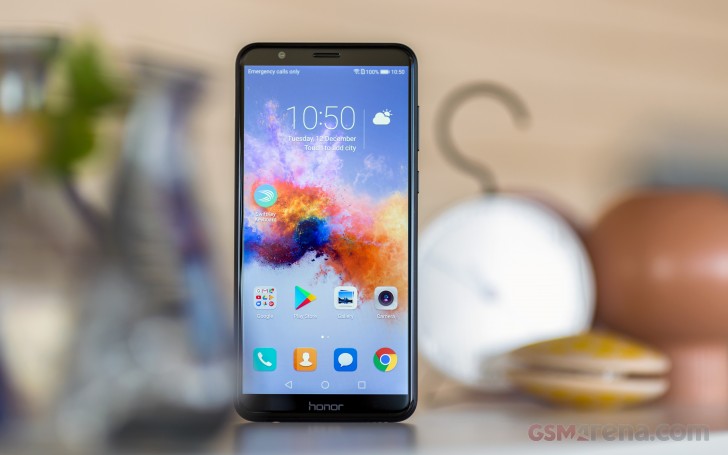
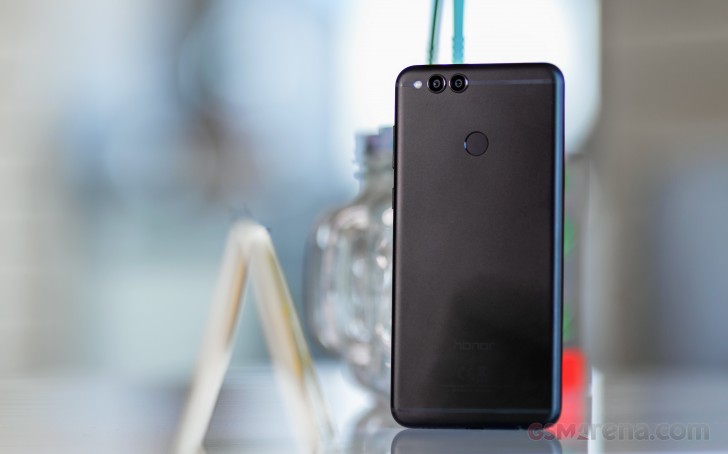
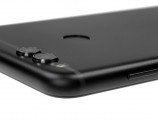
Honor 7X from the back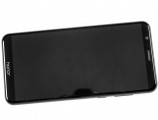
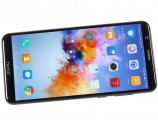

Honor 7X trendy new ultra-wide display
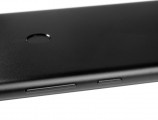
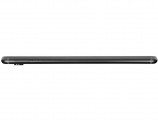
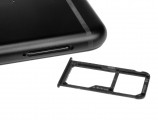
Convenient control layout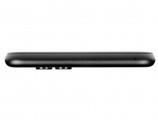
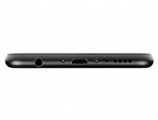
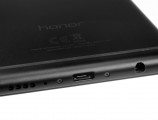
Honor 7X top and bottom sides
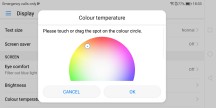
Most accurate custom color setting


Home screen and panels, without an app drawer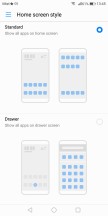

Enabling the app drawer takes a few seconds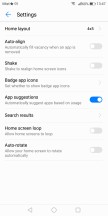
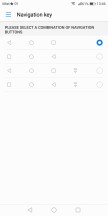


Launcher settings • Navigation bar settings • Theme engine and store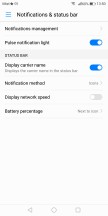
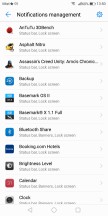
Notification and battery management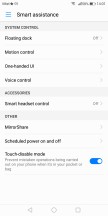
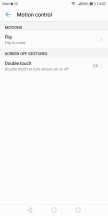


Smart assistance • Floating dock • Motion control • One-handed UI • App twin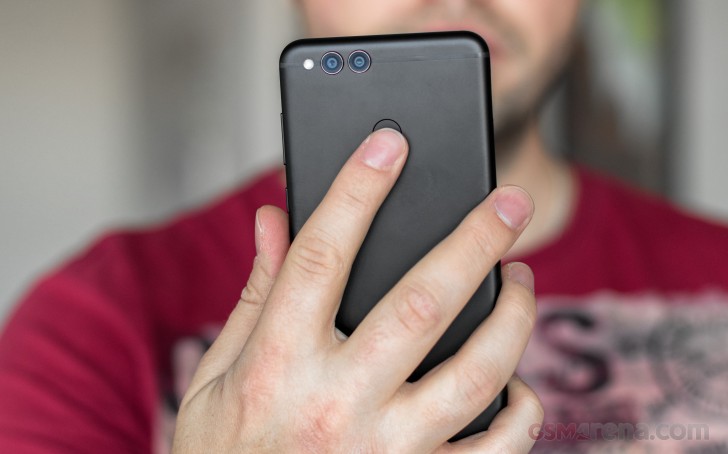

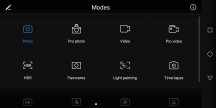
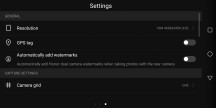

Camera interface

Manual aperture mode • Portrait mode





Honor 7X camera samples 


HDR Off • HDR On • HDR Off • HDR On • HDR Off • HDR On 


HDR Off • HDR On • HDR Off • HDR On • HDR Off • HDR On

Honor 7X vs Huawei Mate 10 Lite vs HTC U11 Life in our Photo compare tool


Honor 7X low light samples
Honor 7X panorama sample


Different levels of wide aperture


Portrait mode samples



Software-only selfie portraits work well enough


Honor 7X selfie samples


Honor 7X vs Huawei Mate 10 Lite vs Xiaomi Mi A1 in our Video compare tool
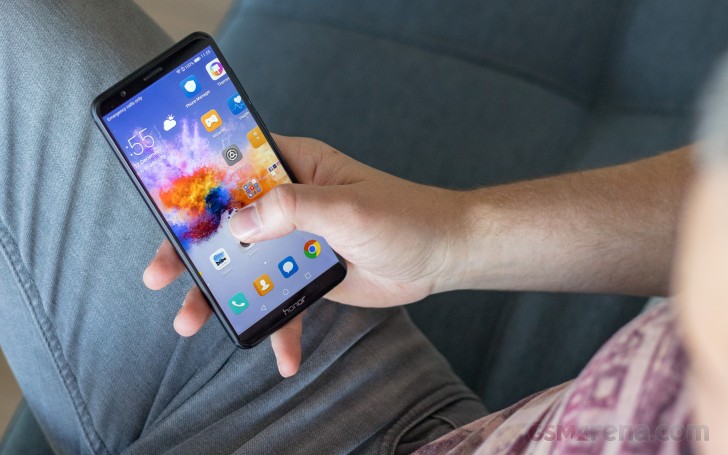





vivo V7+ • Oppo F5 • LG Q6 • Xiaomi Mi A1 • Xiaomi Mi Max 2
Introduction
We've come to accept Honor devices as being great value. Relying on proven technology from its parent company Huawei, the Chinese brand has been consistently focused on bringing very good specs at tempting prices. That's no easy task, yet Honor makes it seem almost effortlessly natural at this point, with devices like the Honor 7X.
Huawei's current Mate lineup already offers great value in the high-end segment, with the Mate 10 and Mate 10 Pro, as well as in the large screen mid-range, in the face of the Mate 10 Lite.
However, it doesn't really take more than a quick specs comparison to see that the Honor is positioning the 7X as an almost identical offer, both hardware and design-wise and at a price point lower than the 350 euro or so the Mate 10 Lite sells for.
Honor 7X specs:
- Body: Metal unibody, 2.5D glass on front
- Screen: 5.93" IPS LCD, 1080p (407ppi); Gorilla Glass (unspecified version)
- Chipset: HiSilicon Kirin 659, 4x Cortex-A53@2.36GHz + 4x Cortex-A53@1.7GHz, Mali-T830MP2
- Memory: 3/4GB RAM + 32/64GB storage, Hybrid microSD slot
- Camera: Dual 16MP (1/2.9", 1.25 µm) + 2MP with PDAF, 1080p @ 30fps video
- Selfie cam: 8 MP, 1080p @ 30fps video
- OS: Android 7.0 Nougat, EMUI 5.1 on top
- Battery: 3,340mAh (non-removable)
- Connectivity: Hybrid Dual Nano-SIM (hybrid microSD slot); LTE Cat4 150/50 Mbps support; Wi-Fi g/b/n; Bluetooth 4.1; GPS with GLONASS; FM radio; 3.5mm audio jack
- Misc: Fingerprint reader, DTS audio
Sure, you might be missing out on some selfie extras and a few other small details here and there, but in the US, Honor 7X is launching at just $200 - a whole $50 less than its Honor 6X predecessor at launch. Europe is getting less of a bargain, but still not that terrible.
Of course, no phone is without its faults. We would have loved to see a USB Type-C port on the Honor 7X. While at it, NFC support to power contactless payments would have been a nice touch as well. Still, in the grand scheme of things, a lesser known brand seems to be enough to save you a pretty penny on some excellent Huawei hardware and hardware package. A deal we would gladly take any day of the week.
Retail Box
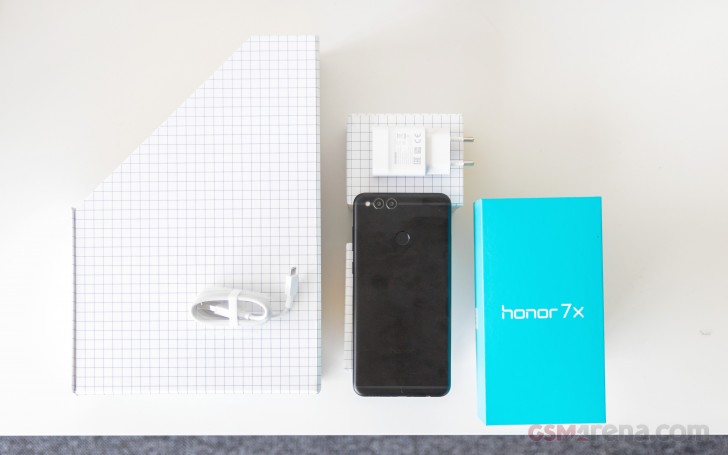
A simple, sturdy, two-piece cardboard box - that's what we like to see from value-conscious devices and that's exactly what the Honor 7X ships in. Nothing too fancy, but we do dig the greenish-blue color Honor went with. It really makes it stand out.
Removing the top part reveals a single compartment that only houses a wall charger and USB cable. Unfortunately, it's the microUSB type and not the newer, reversible Type-C port. The charger is rated at 10W or 2A@5V, which coincidentally is the maximum power the Honor 7X will charge at.
Design
A metal unibody and a glass front - it might be overused, yes, but we still think it's a timeless look. The Honor 7X pulls it off magnificently in every aspect and we'll enjoy every bit of it, before the iPhone-inspired wireless charging-friendly devices come pouring in.
The Honor 7X has extremely flush and natural curves, quite reminiscent of an iPhone 7, or a couple of its predecessors.
The phone barely flexes under pressure and feels as solid as a rock. Past Honor devices have always been sturdy in their own right. This frame, however, is one of the sturdiest we've ever seen on a phone of this price range.
Of course, on the flip side of things, a metal back does mean no wireless charging and requires the presence of antenna lines. The latter, however, are blended in really well with the rest of the body and this is true regardless of the finish you choose - blue, gold or black.
Honor 7X from the back
The only other exterior segment on the Honor 7X is a 2.5D front glass, which tucks away neatly into the frame itself, which is another really pleasant design choice. It's a Gorilla Glass but Honor doesn't reveal which generation.
Whatever the glass may be, the better part of the surface underneath it is occupied by a trendy new extra-wide, 5.9-inch, 18:9 panel. We really appreciate Honor stuck with FullHD, instead of saving a few bucks by going with a lower resolution. But, more on that later.
The side bezels around the panel are quite thin, but nothing we would consider bezel-less. The top and bottom chins are quite reasonably sized as well.
Honor 7X trendy new ultra-wide display
Besides the selfie camera and speaker, the top one also houses a notification LED. The bottom one only has an Honor logo printed on the underlying surface in a very Huawei fashion.
Convenient control layout
On the left side of the phone there is a single tray that houses a regular and hybrid SIM slot on the Dual-SIM model, or substitutes the latter for a dedicated microSD one.
On the opposite side - a volume rocker near the top and a power button beneath that. Both easy to reach, "click-y" and well defined.
Honor 7X top and bottom sides
The top of the Honor 7X is pretty empty, save for a tiny hole for a secondary noise-cancelling microphone. On the bottom - the microSD port, we already whined about along with the single speaker. In all fairness, we can't realistically expect a stereo setup at this price point.
Thankfully, what is included is a good old 3.5mm audio jack.
A rear-mounted fingerprint reader is also part of the mix. In keeping with its solid reputation in this area, Huawei equipped the Honor 7X with a very snappy and accurate scanner. Naturally, it is always-on and can unlock the phone from standby. No complaints there.
A surprisingly good 5.93-inch, FullView display
The Honor 7X packs a 5.9" IPS LCD with an 18:9 aspect ratio, quite similar to the one on the Mate 10 Lite.
It is a very decent panel and we particularly appreciate Honor hasn't gone for a lower than 1080p resolution.
This makes for a pixel density of 407ppi - perfectly sharp by modern standards.
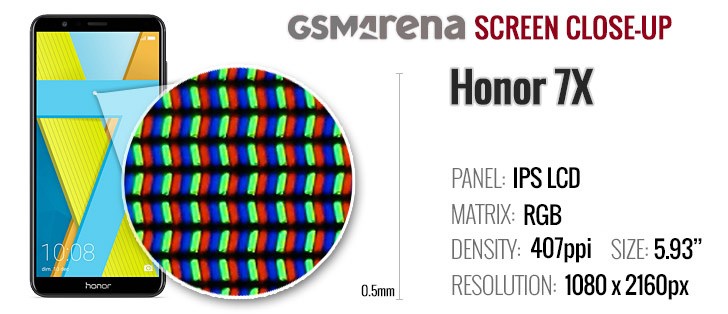
Looking at the test numbers, we are actually fairly certain that the Honor 7X has borrowed the exact same IPS LCD panel from its Mate 10 Lite cousin, or if not, a very similar one. The phone managed a respectable maximum brightness of 458 nits, just a few shy from the Mate and well within the margin of error.
| Display test | 100% brightness | ||
| Black, cd/m2 | White, cd/m2 | ||
| 0.00 | 625 | ∞ | |
| 0.382 | 603 | 1579 | |
| 0.376 | 591 | 1572 | |
| 0.321 | 579 | 1804 | |
| 0.351 | 560 | 1595 | |
| 0 | 559 | ∞ | |
| 0.351 | 551 | 1570 | |
| 0.512 | 537 | 1049 | |
| 0.475 | 528 | 1112 | |
| 0 | 526 | ∞ | |
| 0.353 | 522 | 1479 | |
| 0.401 | 519 | 1294 | |
| 0 | 518 | ∞ | |
| 0.564 | 507 | 899 | |
| 0 | 485 | ∞ | |
| 0.322 | 484 | 1503 | |
| 0.00 | 484 | ∞ | |
| 0.257 | 476 | 1852 | |
| 0.236 | 458 | 1941 | |
| 0.32 | 450 | 1398 | |
| 0.297 | 431 | 1451 | |
| 0.539 | 428 | 794 | |
| 0.00 | 422 | ∞ | |
| 0 | 413 | ∞ | |
| 0 | 408 | ∞ | |
| 0 | 371 | ∞ | |
| 0.00 | 353 | ∞ | |
| 0 | 348 | ∞ | |
| 0 | 326 | ∞ | |
On the other hand, it managed to keep deeper blacks at full blast, which means a better contrast ratio rating. A pretty high one at that. Automatic brightness adjustment works well, but there is no max auto overdrive mode for use under direct sunlight. Still, the Honor 7X remains perfectly usable outdoors, with a strong sunlight legibility rating.
Sunlight contrast ratio
Out of the box, the Honor 7X ships with a very cold color profile which gives whites a bluish cast. Still, not that bad in terms of accuracy with an average DeltaE of 5.6 and a maximum of 9.7.
However, it also offers color correction with manual adjustment and presets. Avoid the latter, since they are both way too extreme. You can try and mimic our best achieved setting instead, which, after a bit of tuning, brought down the DeltaE numbers to just 2.8 on average and 5.4 in the maximum - we would consider that color accurate.
Most accurate custom color setting
Battery Life
Battery is another are the Honor 7X borrows heavily from the Mate 10 Lite. So much so that it packs in the exact same capacity 3,340mAh battery pack. Since the display and chipset are also identical in both devices and the software differences are minor at best, it should come as no surprise that the pair manage their battery life equally well.
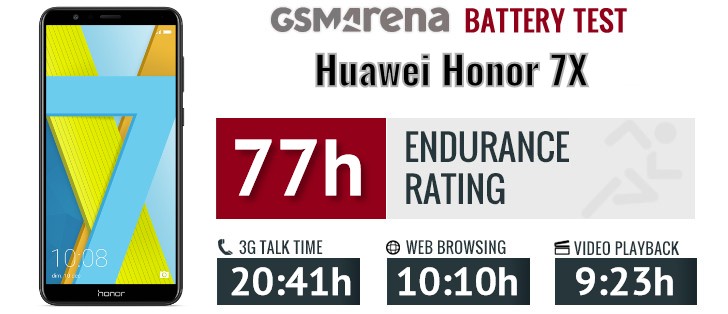
An endurance of 77 hours is above average and in the ballpark for a 16nm chip. The performance in the individual test routines - standby, call, and web - is quite promising but it was let down by its relatively higher power draw in video playback.
The only real let-down in this department is the lack of any quick charge support on the Honor 7. Its 10W charger is capable of bringing the battery from 0% to around 33% in half and hour and a full recharge takes about two and a half hours. Then again, we can't really be disappointed, considering the price bracket the Honor 7X is competing in.
Our endurance rating denotes how long a single battery charge will last you if you use the Honor 7X for an hour each of telephony, web browsing, and video playback daily. We've established this usage pattern so our battery results are comparable across devices in the most common day-to-day tasks. The battery testing procedure is described in detail in case you're interested in the nitty-gritties. You can also check out our complete battery test table, where you can see how all of the smartphones we've tested will compare under your own typical use.
Audio output is accurate but quiet
The Huawei Honor 7X audio output is nicely accurate both with an active external amplifier and with a pair of headphones. In fact the only affected reading when our standard set came into play was the stereo crosstalk which increased from excellent to average levels.
The loudness was below average in both scenarios though, which prevents us from giving full marks here. Then again that might not be a great concern if you don’t have high-impendance headphones so you’ll be the final judge.
| Test | Frequency response | Noise level | Dynamic range | THD | IMD + Noise | Stereo crosstalk |
| +0.03, -0.03 | -89.5 | 89.4 | 0.0028 | 0.014 | -86.6 | |
| +0.14, -0.05 | -89.3 | 89.2 | 0.0086 | 0.089 | -52.6 | |
| +0.03, -0.05 | -85.0 | 88.8 | 0.0014 | 0.0065 | -92.9 | |
| +0.14, -0.04 | -91.8 | 91.8 | 0.0031 | 0.113 | -56.8 | |
| +0.06, -0.08 | -93.5 | 93.3 | 0.0020 | 0.0071 | -93.2 | |
| +0.64, -0.07 | -89.3 | 91.3 | 0.0093 | 0.361 | -52.0 | |
| +0.01, -0.03 | -92.8 | 92.8 | 0.0032 | 0.031 | -92.3 | |
| +0.23, -0.15 | -92.1 | 91.8 | 0.013 | 0.223 | -77.3 | |
| +0.04, -0.02 | -88.2 | 88.6 | 0.011 | 0.021 | -84.3 | |
| +0.13, -0.05 | -87.4 | 87.7 | 0.014 | 0.084 | -75.9 |
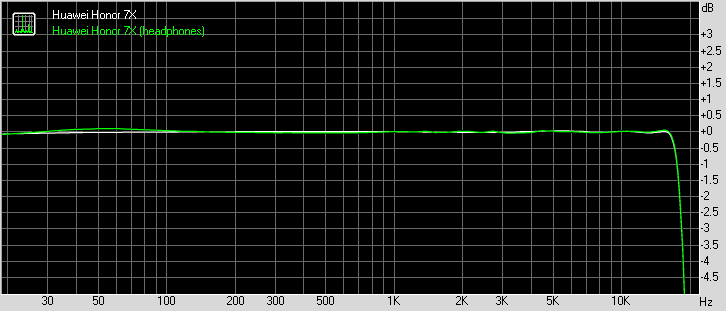
You can learn more about the tested parameters and the whole testing process here.
Loudspeaker
Drawing yet another comparison, the Honor 7 has a single speaker, just like the one on the Mate 10 Lite. Quite literally, since the bottom-firing unit scored almost identical loudness scores on the Honor 7X.
| Speakerphone test | Voice, dB | Ringing | Overall score | |
| 63.1 | 67.3 | 71.3 | Average | |
| 61.7 | 69.7 | 71.8 | Average | |
| 64.5 | 71.0 | 68.9 | Average | |
| 67.3 | 67.8 | 72.8 | Average | |
| 66.1 | 66.9 | 75.5 | Good | |
| 62.9 | 70.3 | 77.0 | Good | |
| 66.4 | 66.2 | 78.0 | Good | |
| 68.4 | 67.0 | 79.1 | Good | |
| 72.0 | 66.6 | 77.5 | Good | |
| 67.2 | 71.1 | 80.7 | Good | |
| 67.3 | 70.3 | 81.5 | Very Good | |
| 68.5 | 71.7 | 80.3 | Very Good | |
| 68.0 | 70.2 | 82.3 | Very Good | |
| 68.3 | 71.6 | 81.0 | Very Good | |
| 67.3 | 73.1 | 80.6 | Very Good | |
| 68.5 | 72.5 | 80.1 | Very Good | |
| 61.7 | 73.1 | 86.7 | Very Good | |
| 67.8 | 71.2 | 83.1 | Very Good | |
| 66.4 | 71.1 | 85.1 | Very Good | |
| 67.8 | 71.0 | 84.5 | Very Good | |
| 78.4 | 71.7 | 79.2 | Excellent | |
| 74.0 | 73.9 | 90.4 | Excellent | |
| 88.9 | 77.8 | 84.6 | Excellent |
Now, it is worth noting that unlike the Mate 10 Lite, the Honor has DTS audio splattered on its specs sheet. However, those improvements seem to be limited to the output through the audio jack. As for the loudspeaker, the Honor 7 sounds as good and as loud as its name-brand sibling. Which is to say, quite impressive for its price.
EMUI 5.1 on top of Nougat
Android 7 Nougat with EMUI 5.1 is a combination we've seen time and time again in both Huawei's and Honor's ranks. In that regard, there is nothing special or unexpected about it. However, that should not be misconstrued as criticism against the company's UX. In fact, Emotion UI is constantly getting better, with behind-the-scenes improvements, like better RAM management, improved miss-touch detection and higher touch accuracy, to name a few.
Plus, we appreciate the constantly shrinking amount of bloat, bundled in the ROM (although, there is still fat to trim) and the number and convenience of the baked-in features.
Home screen and panels, without an app drawer
For instance, you don't have to be stuck with or without an app drawer. EMUI offers both and switching between them only takes a few seconds. You can be as organized or disorderly as you want.
Enabling the app drawer takes a few seconds
And there are some other launcher options to explore as well, ranging from layout arrangement, to more advanced search and suggestion features. You can also swap the navigation bar controls to match your preferences. Honor didn't skip on a theme engine either and you have a rich selection of free themes in the online store.
Launcher settings • Navigation bar settings • Theme engine and store
Speaking of neat advanced features not necessarily found in cheaper devices, the Honor 7X has a split screen mode. It is a pretty good way to make use of the extra screen height, but we can't fail to complain about the still limited app support for the feature.
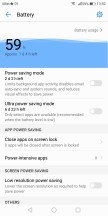
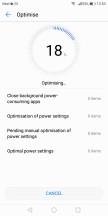
Notification and battery management
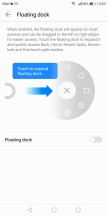
And while we're on the topic of convenient extra accessibility perks, EMUI has a few other notable ones. In no particular order, these include a powerful notification and battery managers, some gestures, quick access floating controls, one-handed UI and even app twins (only for a limited number of supported apps, though).
Smart assistance • Floating dock • Motion control • One-handed UI • App twin
Performance
We realize the parallels are getting kind of repetitive, but can't avoid referencing the Mate 10 Lite yet again. It already offered some benchmark numbers and painted a pretty decent and usable picture for the Kirin 659 chipset. It is more of the same with the Honor 7X. Its scores are pretty much the same (within margin of error).
That being said, you can expect pretty similar conclusions. The Kirin 659 has a total of four Cortex-A53 cores. Four of those take the heavy lifting and work at 2.36GHz, while the other four take care of less power-intensive tasks while ticking at 1.7GHz.
GeekBench 4 (multi-core)
Higher is better
GeekBench 4 (single-core)
Higher is better
These actually handle number-crunching quite decently. We decided to post the older GeekBench 4 scores here for comparison purposes with slightly older devices in our database, like the Helio-X20 Xiaomi Redmi Note 4. The newer version of the benchmark paints an almost identical story. You can pretty much expect CPU performances slightly above the Snapdragon 625 and slightly below the Helio P20 and Snapdragon 630.
Basemark OS 2.0
Higher is better
This looks about as expected for the 100Mhz clock speed bump over the older Kirin 658 (Huawei P10 Lite). However, we do have to mention that we don't exactly appreciate the absence of 5GHz Wi-Fi in this chip. Other than that, its 16nm fabrication process isn't quite as efficient as Qualcomm's increasingly popular 14nm one, but still provides enough wiggle room for the Honor 7X to run cool and remain throttle-free under loads.
AnTuTu 6
Higher is better
Overall, paired with 4GB of RAM (as in our review unit), as well as 3GB, the Kirin 659 definitely delivers in everyday workloads. Unfortunately, the same can't be said when you add GPU rendering tasks to the mix.
GFX 3.1 Manhattan (onscreen)
Higher is better
GFX 3.1 Car scene (onscreen)
Higher is better
Now, to be fair, Huawei and its HiSilicon chipset division have come a long way since the old days of integrating what seemed like a tiny person with a pencil to churn out pixels.
However, there are only two Mali-T830 cores inside the Honor 7X and those really struggle with modern graphics loads.
Basemark X
Higher is better
Still, to be fair, most of its competitors in this or similar price brackets don't really have it much better. That is, not counting some odd exception, like the severely depreciated HTC U Ultra.
If you are really into mobile gaming, then a recent Qualcomm chipset might be able to provide slightly better graphical fidelity for your buck. It is also worth noting that unlike the deliberately tasking synthetic tests, real-world game engines have become increasingly optimized, so you shouldn't loose too much sleep over the GPU aspect of things.
Camera and image quality
Unlike its Mate 10 Lite sibling, the Honor 7X doesn't have any lofty imaging-related titles, like the 'World's first phone with four cameras' to its name. Still, that is entirely due to the lack of a second selfie sensor. Other than that, both devices share identical main camera setups.
It consists of a 16MP, 1/2.9", 1.25 µm, f/2.2 one, with phase-detection autofocus, accompanied by a 2MP sensor for depth information, and a single LED flash. It is a solid combo, but you shouldn't let the pure number of lenses on the back fool you into comparing it with the likes of the Huawei P10 pair, or those on the Mate 10 and Mate 10 Pro, or even the Honor 9.
On the Honor 7X, the 2MP sensor is only there for additional depth information in portrait mode, as well as a little boost in resolved detail when shooting in the dark. And you can't use it to capture images directly. And even in those two scenarios it does very little to benefit the photo quality if at all.
Before we get to the actual stills and videos, though, a few words regarding the camera app interface is familiar as we have already seen it on the P10 and Mate 10 phones. The options are hidden in menus you can bring up by swiping left or right from the screen (assuming you hold the camera in portrait mode).
The main menu houses all the available shooting modes - Photo, HDR, Panorama, Pro, Light Painting, among others. There is also an advanced settings menu, summoned by a swipe from the top.
Camera interface
The Honor 7X isn't particularly shy about showcasing its dual-camera features. The main interface has a quick shortcut for manual aperture mode, as well as portrait mode. The latter actually has its bokeh effect as a toggle, along with a customizable strength beautification filter. You can choose to use any combination of the two on your subject. Faces work best, naturally, but we did have some success with objects too, though with a little extra patience.
Manual aperture mode • Portrait mode
The Huawei camera app offers a Manual (Pro) mode, which manual focus, shutter speed (up to 8s), ISO, and a few other options. The Pro camera interface is very easy to use.
Image quality
The shots we took with the Honor 7X in daylight are satisfactory, but not really spectacular.
Noise is also somewhat of an issue, with plenty of suppression artifacts left in the sky and other uniform surfaces.
Honor 7X camera samples
Dynamic range is not particularly wide, but on a more positive note, colors look very natural. That being said, however, if you prefer a punchier, contrast-heavy look, they might not be to your liking.
As showcased in the screenshots, there is a manual HDR mode included on the Honor 7X. It is unfortunately tucked away behind a swipe and a click, which can be a bit cumbersome to pull off quickly. Then again, the phone does well enough in its automatic mode, as far as details in the shadows and highlights go.
HDR Off • HDR On • HDR Off • HDR On • HDR Off • HDR On
HDR doesn't really help all that much. We only found ourselves reaching for it when we really knew a certain scene could benefit from the technique.
HDR Off • HDR On • HDR Off • HDR On • HDR Off • HDR On
You can check out the Honor 7X in our photo compare tool for more pixel-peeping action.
Honor 7X vs Huawei Mate 10 Lite vs HTC U11 Life in our Photo compare tool
The secondary sensor seems to help low-light performance on the Honor 7X by a very small degree. Even so, the results can only be described as serviceable and good enough for the price. Nothing too spectacular to speak of here.
Honor 7X low light samples
The panorama mode is one of the better implementations, switching automatically between portrait and landscape. When shooting in portrait, panoramic images turn out just over 3,000 pixels tall and the sample below is about 20MP. Stitching is good, exposure is even, and the captured detail is above average and the dynamic range is very good.
Honor 7X panorama sample
Variable aperture
Wide aperture, as Honor and Huawei call it, utilizes the depth information from the second 2MP camera. It lets you simulate the background defocusing wide apertures would give you and you can adjust the effect to simulate between f/0.95 and f/16.
Different levels of wide aperture
As with most such implementations, the effect is far from perfect and the shots don't exactly hold up to pixel scrutiny. The Mate 10 Pro definitely does a better job of isolating the subject form the background. With the Honor 7X, the effect is mostly applied on a circular basis, with an increasingly smaller sharp area in the center. Still, it does offer nice granular control over the blue and with a little patience, you can grab and impressive shot.
Portrait mode
Overall, portrait mode combines variable aperture with beautification filters. As previously mentioned, you can go for any combination of the blur effect and varying levels of make-up. The latter is actually on the conservative side.
As for the bokeh effect, it is a bit smarter than the one used in the wide aperture mode. There is some face detection involved here and the effects are notably better. Not perfect, but still, a solid effort, with usable results.
Portrait mode samples
Even though the Honor 7X lacks the secondary front camera of the Mate 10 Lite, is still offers software-only portrait selfies. These are perfectly serviceable in our book.
Software-only selfie portraits work well enough
Selfies
The 8MP selfie shooter on the Honor 7X does a pretty decent job without any fancy portrait modes. Details are plenty and colors are nice and natural, just like on the back.
Honor 7X selfie samples
Playing around with beautification modes rarely produces unpleasant and over-the-top results - you won't hear us praising any beautification mode.
Video camera
The Honor 7X can only record video at up to 1080p at 30fps. There's no 1080p @ 60fps or 4K recording. This is probably one of the bigger annoyances with the device. However, taking its price tag and competitors into consideration (well, except the Xiaomi Mi A1, that is), we can't exactly expect UHD recording by all means.
Plus, this is not some exclusive handicap imposed on the Honor 7X artificially, but rather a chipset limitation. One shared with the Mate 10 Lite. So again, no misalignment in functionality to speak of.
The Honor 7X records clips in AVC, inside an MP4 file, with a bitrate of 17Mbps. Audio is captured at a good 192Kbps (48kHz) rate, in stereo of course.
The noise is kept low though, and the colors and contrast are very good.
As per usual, you can download a short, untouched clip as well - 1080@30fps (10s, 22MB).
Last, but not least, here's how the Honor 7X stacks up against competitors in our video compare tool.
Honor 7X vs Huawei Mate 10 Lite vs Xiaomi Mi A1 in our Video compare tool
The competition
The Honor 7X came out of this review looking pretty good and understandably so. It is a solid mid-range handset, with a solid build and dependable overall performance. However, slapping on a universal recommendation for it turned out to be less than straight-forward.
Currently, the Honor 7X is retailing for vastly different prices in various markets. The US has a killer deal at just $200, while most of Europe can only hope to realistically snatch one up for as low as €250-€300.
There are a few devices with screens with tall aspect ratios to potentially consider around the €250 - €300 mark, especially if you are willing to import from China. The vivo V7 and V7+, depending on your size preference, are two of those. Both offer subjectively better performance, but do so with other trade-offs, like a lower resolution display, and a single camera setup.
Mostly the same can be said about the Oppo F5. It does have a brighter f/1.8 lens on its main camera, which does mean slightly better night-time performance. Then again, our F5 review unit had notable focusing issues, which might still be an unpleasant reality to deal with.
For a more Western-friendly, "name brand" with the modern tall screen, there is the LG Q6. While a good choice overall, it is notably smaller, with its 5.5-inch display diagonal.
vivo V7+ • Oppo F5 • LG Q6 • Xiaomi Mi A1 • Xiaomi Mi Max 2
Dropping the tall screen aspect display from the requirements list, ushers in a few more interesting options. The Xiaomi Mi A1 is an excellent all-round device - powerful enough, battery-efficient, well-built and a pretty well-equipped for trendy portrait photography. Plus, there is the added allure of Android One and quick updates.
And finally, for the phablet-enthusiasts, there is the Mi Max 2, also courtesy of Xiaomi. Standing tall and wide at 6.44 inches, it will never leave you short of screen real-estate, or battery, for that matter.
The verdict
Frankly, if you are looking for a trendy new ultra-wide phone, without breaking the bank, it is hard to beat Honor's value proposition on the 7X. Circling back to the earlier financial aspect of things, however, there is a major asterisk here. Checking some of the other options we listed on your local market is a good idea. If nothing else, look around for the Huawei Mate 10 Lite, since many carrier, especially across Europe are offering it with a subsidised price, which might even the price of the two.
Pros
- Solid build quality
- Great ultra-wide display
- Solid battery life
- Dependable overall performance
- Flexible and feature-rich EMUI 5.1 android ROM
- Nice all-round camera experience with nice portrait shots, plenty of modes and advanced manual controls available
- Fast and accurate fingerprint reader
Cons
- No NFC or 5GHz Wi-Fi Support
- No fast charging
All things considered, the Honor 7X is a solid, all-round device, even if, admittedly, a pretty boring and uninspired one. It's a safe, dependable and financially sound choice. One that doesn't promise anything more than what it can deliver but one that delivers just enough to pass as one of our recommendations of the season.


No comments